
Imagine walking into a room where the air carries the scent of jasmine and marigold, where the walls are draped in jewel-toned fabrics, where the sound of music mingles with the jingle of bangles and anklets. Somewhere, a woman in a crimson silk saree catches the light and it seems to glow from the inside. A man in an ivory sherwani laughs and the gold embroidery at his collar catches the flame of a nearby diya.
This is Indian celebration. And the clothing is not decoration — it is language.
Every garment tells a story. Every color carries meaning. Every fabric, stitch, and drape is the product of centuries of artistry, regional identity, and cultural pride. If you’ve been invited to an Indian wedding, festival, or cultural celebration for the first time — or if you’re simply curious about one of the world’s richest textile traditions — this guide is your warm, thorough introduction.
India is not one culture. It is a mosaic of 28 states and 8 union territories, each with its own languages, traditions, and distinctive clothing heritage. What you’ll find here is a celebratory overview — a starting point for deeper curiosity and genuine appreciation.
“In India, getting dressed for a celebration is not an afterthought. It is the first act of the celebration itself.”
Why Clothing Matters So Deeply in Indian Celebrations
In many Western contexts, what you wear to a party is largely a matter of personal style. In Indian celebrations, clothing carries a weight that goes far beyond aesthetics. It signals respect — for the occasion, for the host family, and for the cultural traditions being honored. It communicates joy. In fact, at many Indian celebrations, wearing bright, festive colors is considered a gift to the event itself.
Clothing in Indian culture is also deeply tied to identity. The way a saree is draped varies from state to state — a Bengali bride drapes differently from a Tamil bride, and both differ from a Maharashtrian bride. A Punjabi woman’s salwar kameez has a different silhouette and embroidery style than one from Lucknow or Rajasthan. These are not trivial distinctions. They are living expressions of heritage passed from generation to generation.
For a guest who is new to Indian celebrations, understanding even the basics of this clothing language is a genuine act of respect and curiosity. And most Indian hosts will be deeply moved that you tried.
The Palette of Celebration: Understanding Color in Indian Attire
Before we explore specific garments, it helps to understand how color functions in Indian celebratory dress — because color is never arbitrary.
Colors That Celebrate
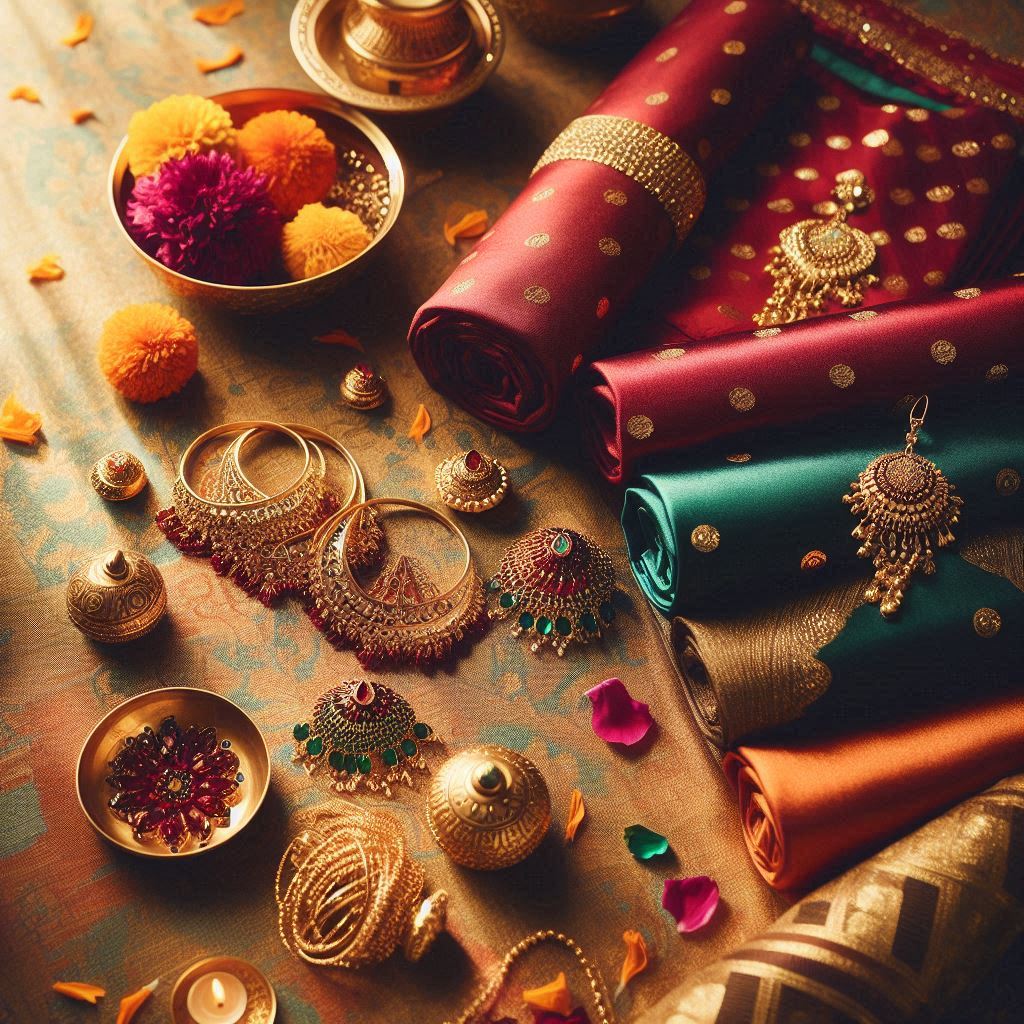
Red is the most auspicious color in Indian culture, deeply associated with marriage, prosperity, and new beginnings. Brides in many traditions wear red as their primary color. Saffron and orange carry spiritual significance and are common in religious celebrations and festivals. Gold — whether as embroidery, jewelry, or fabric — is universally celebratory, representing wealth, light, and divine blessing. Pink, yellow, and green are joyful, festive colors widely worn at pre-wedding celebrations like mehndi and haldi ceremonies.
Colors to Approach Thoughtfully
White has traditionally been associated with mourning in many Hindu traditions, so it is generally avoided at weddings and auspicious celebrations — though this is shifting in urban contexts. Black, similarly, has historically been considered inauspicious at certain celebrations. If you’re unsure, err toward vibrant, warm tones. When in doubt, ask your host — they will almost always be happy to guide you, and the question itself shows care.
Women’s Attire: A World of Fabric, Drape, and Detail
The Saree
The saree is perhaps the most iconic garment in Indian culture — and one of the most ancient forms of dress still worn daily around the world. It is a single unstitched length of fabric, typically between five and nine yards long, draped around the body in a style that varies by region, occasion, and personal preference.
For celebrations, sarees are most commonly made from silk — Kanjivaram silk from Tamil Nadu, Banarasi silk from Varanasi, or Chanderi silk from Madhya Pradesh are among the most prized. They are often woven with intricate gold or silver zari (metallic thread) borders and pallus (the decorative end that drapes over the shoulder). The weight, sheen, and movement of a silk saree is unlike any other garment in the world.
Wearing a saree for the first time can feel daunting, but most Indian women are genuinely delighted to help a newcomer drape one. If you’re attending a multi-day wedding celebration, the saree is an excellent choice for the main wedding ceremony or reception. Pre-tied sarees and saree gowns — modern adaptations that offer the look without the complex draping — are also widely available and entirely appropriate.
Styling tip: Pair a silk saree with a fitted blouse (called a choli), heeled sandals, and simple gold jewelry. Let the saree be the statement — keep accessories elegant rather than competing.
Salwar Kameez & Churidar
The salwar kameez is one of the most versatile and widely worn ensembles in Indian women’s fashion. It consists of a long tunic (kameez) worn over trousers (salwar), typically accompanied by a long scarf called a dupatta. The churidar is a variation where the trousers are fitted and gathered at the ankle, giving a more formal silhouette.
For celebrations, heavily embroidered versions — often worked in thread embroidery, mirror work, or embellishments like sequins and beads — are the norm. Styles from Lucknow are known for their delicate chikankari (white-on-white hand embroidery), while Punjabi styles tend toward bolder colors and phulkari (floral) embroidery. The Anarkali suit — a floor-length, flared kameez — is particularly popular at weddings and formal occasions.
Styling tip: An Anarkali suit in a rich jewel tone — emerald, royal blue, or deep plum — is a stunning, accessible choice for guests attending their first Indian celebration. It’s elegant, festive, and easy to wear.
Lehenga Choli
The lehenga choli is one of the most glamorous ensembles in Indian fashion — and a favorite for weddings, sangeet nights (pre-wedding dance celebrations), and festival occasions. It consists of a heavily embroidered or embellished long skirt (lehenga), a fitted cropped blouse (choli), and a dupatta draped elegantly over the shoulder or head.
Lehengas can range from relatively simple cotton pieces for casual festivities to extraordinarily ornate silk and velvet creations encrusted with embroidery, mirrors, and gemstones for formal weddings. The silhouette is dramatic and celebratory — it is clothing designed to make the wearer feel like the room notices when she enters. For guests, a lehenga choli signals that you fully embraced the occasion and dressed for it with intention.
Styling tip: For a wedding reception or sangeet, a lehenga in a rich pink, orange, or turquoise with gold embroidery makes a joyful, appropriate statement. Wear your hair up to show off the neckline of the choli.
“Indian textiles are not just fabric. They are geography, history, and identity woven into something you can wear.”
Men’s Attire: Elegance With Deep Roots
Sherwani
The sherwani is the quintessential formal garment for Indian men at celebrations — particularly weddings, where it is the traditional attire for the groom and his close family. It is a long, structured coat-style garment, typically knee-length or longer, worn over fitted churidar trousers. Sherwanis are most commonly made in rich fabrics like brocade, velvet, or silk and feature intricate embroidery — particularly around the collar, cuffs, and hem.
For a groom, the sherwani might be ivory or gold, heavily embroidered and worn with a turban (safa or pagri) that varies by region and family tradition. For male guests, a simpler sherwani in a jewel tone — deep blue, bottle green, burgundy — is an excellent and deeply appreciated choice at a formal Indian wedding.
Styling tip: Pair a sherwani with mojris — traditional Indian leather shoes with a pointed, curled toe, often embroidered — for an authentically polished look that Indian hosts will truly appreciate.
Kurta Pajama & Kurta Churidar
The kurta is a long tunic, typically collarless or with a simple mandarin collar, worn over loose trousers (pajama) or fitted churidar. It is the most versatile garment in Indian men’s fashion — ranging from a casual cotton kurta for a daytime festival to a heavily embroidered silk kurta for a formal wedding reception.
For celebrations, kurtas in rich fabrics with subtle embroidery at the neckline and cuffs strike an ideal balance between festive and effortless. The kurta pajama has become increasingly fashionable beyond Indian communities and is a wonderful choice for male guests who want to honor the occasion without the full formality of a sherwani.
Styling tip: A silk or cotton-silk blend kurta in a warm mustard, rust, or deep teal with minimal embroidery and slim churidar trousers is a refined, celebratory look that works for almost any Indian occasion.
Dhoti & Dhoti Kurta
The dhoti is one of the oldest forms of Indian dress — an unstitched length of white or cream cotton fabric draped and tucked around the lower body. In South Indian traditions particularly, the dhoti (called veshti in Tamil Nadu or mundu in Kerala) is formal, sacred attire worn by men at religious ceremonies and traditional celebrations.
The dhoti kurta — a dhoti worn with a matching kurta — bridges traditional and contemporary sensibilities and is widely worn at temple ceremonies, religious festivals, and traditional weddings. For guests unfamiliar with dhoti draping, pre-stitched dhoti-style trousers offer the silhouette without the complexity.
Regional Attire: A Glimpse Into India’s Diversity
One of the most beautiful aspects of Indian celebratory dress is how dramatically it varies by region. Understanding even a little of this regional diversity deepens appreciation for what you’re witnessing at a celebration.
North India
North Indian celebrations — particularly Punjabi and Rajasthani weddings — are characterized by bold colors, heavy embroidery, and maximum glamour. Women often wear lehengas or heavily embroidered salwar kameez. Men’s sherwanis are ornate and frequently paired with dramatic turbans. Phulkari embroidery from Punjab and gota patti (ribbon) work from Rajasthan are particularly distinctive.
South India
South Indian celebrations have a character that is equally magnificent but distinct in aesthetic. Silk — particularly the lustrous, temple-motif Kanjivaram silk — dominates. Brides wear silk sarees in deep reds, greens, and gold. Men wear silk dhotis (veshtis) with matching angavastrams (shoulder cloths) and silk kurtas. Gold jewelry is exceptionally prominent, often covering the neck, arms, ears, and hair.
West India
Gujarat and Maharashtra each have rich textile traditions. Gujarati celebrations often feature the vibrant bandhani (tie-dye) fabric and mirror-work embroidery that make the clothing literally sparkle. Maharashtrian celebrations have a distinct, elegant aesthetic — the Nauvari saree (a nine-yard saree draped in a distinctive style that allows freedom of movement) is iconic.
East India
Bengali celebrations are marked by the distinctive tant and Jamdani cotton sarees — lightweight, beautifully woven, and elegant in their simplicity. White sarees with red borders are quintessentially Bengali and worn at both celebrations and auspicious occasions. The dhuti-panjabi (dhoti and long kurta) is the traditional male attire for Bengali celebrations.
“To learn about how a culture celebrates is to understand what it holds most dear.”
Jewelry: The Language Beneath the Garment
In Indian celebratory dress, jewelry is not an accessory — it is integral to the ensemble. Understanding the significance of certain pieces adds another layer of cultural appreciation.
For women, the maang tikka (a pendant worn at the hairline), jhumkas (bell-shaped earrings), bangles, and the nath (nose ring) are among the most traditional pieces worn at weddings and major celebrations. Gold is the dominant metal, though silver is more common in certain tribal and regional traditions. The combination of red bangles, gold jewelry, and a red saree in bridal attire carries deep symbolic meaning across many traditions.
For men at formal celebrations, a simple gold chain, a brooch at the sherwani collar, or a pearl necklace can complete the ensemble in an authentically Indian way. Turbans, when worn, are often decorated with a sarpech — an ornamental brooch at the front — and strings of flowers or pearls.
A Practical Guide for First-Time Guests
What to wear if you’re a non-Indian guest
The most important thing is to try. Wearing Indian attire to an Indian celebration is almost universally appreciated by hosts and is seen as a genuine gesture of respect and celebration. You do not need to get everything perfectly right. The effort is what matters.
For women, a salwar kameez in a festive color or a simple lehenga are the most accessible starting points — both are easy to find online or at Indian clothing stores, require no complex draping, and look beautiful with minimal styling. For men, a kurta pajama in a rich color with simple embroidery is an excellent, elegant choice.
If you are uncertain, reach out to your host or a mutual friend. Asking what to wear is not an imposition — it is a sign of respect that most Indian hosts genuinely love to be asked.
Dress code terms you may see on invitations
Indian wedding invitations sometimes include attire guidance. “Indian formals” or “ethnic formals” means traditional Indian attire or a formal Western equivalent. “Cocktail” typically means a dressy Western outfit or Indian semi-formal attire. “Sangeet” nights tend toward more playful, colorful attire. “Mehndi” ceremonies are daytime events where slightly lighter, more relaxed festive attire is appropriate. “Baraat” (the groom’s procession) is joyous and energetic — wear something you can dance in.
A note on modesty and coverage
Indian celebrations — particularly those with religious components or traditional family structures — generally appreciate modest coverage. For women, having a dupatta (scarf) available to drape over the shoulder or cover the head at certain ceremonial moments is both practical and respectful. For men, avoid overly casual attire like shorts or t-shirts at formal celebrations.
Caring for Indian Celebration Attire
If you’ve been gifted Indian clothing or invested in a beautiful piece for a celebration, knowing how to care for it properly ensures it lasts for years. Silk sarees and embroidered garments should almost always be dry cleaned — water can distort the embroidery and damage the weave. Store silk garments wrapped in muslin cloth (not plastic) to allow them to breathe. Keep them away from direct sunlight, which can fade the rich colors over time. Gold zari embroidery is particularly delicate — handle with care and avoid folding repeatedly at the same points.
A well-cared-for Indian garment does not just last — it deepens in beauty and meaning. Many Indian families pass sarees and sherwanis from generation to generation, each wearing adding a new layer of memory to the fabric.
The Deeper Gift of Curiosity
Learning about Indian cultural attire is not just about knowing what to wear. It is about entering a celebration with open eyes — noticing the stories in the embroidery, the geography in the fabric, the history in the drape. It is about recognizing that what you are witnessing is a living tradition, one that has survived centuries of change and continues to evolve with extraordinary creativity and pride.
When you take the time to understand — even a little — you transform from a guest into a witness. And that shift changes everything about how a celebration feels, both for you and for the people who invited you into it.
At Connect-n-Rejuvenate, we believe this is what celebration is ultimately about: not just marking an occasion, but truly entering it. Letting it teach you something. Letting it connect you more deeply to the people and traditions around you.
So arrive with curiosity. Dress with intention. And let yourself be delighted by everything you’re about to discover.
Which aspect of Indian celebratory attire are you most curious to learn more about?
If you’ve been invited to an Indian celebration, what one step could you take this week to honor the occasion with intention?