
When I think of Maha Shivaratri, I don’t remember noise, colors, or crowds. I remember quiet.
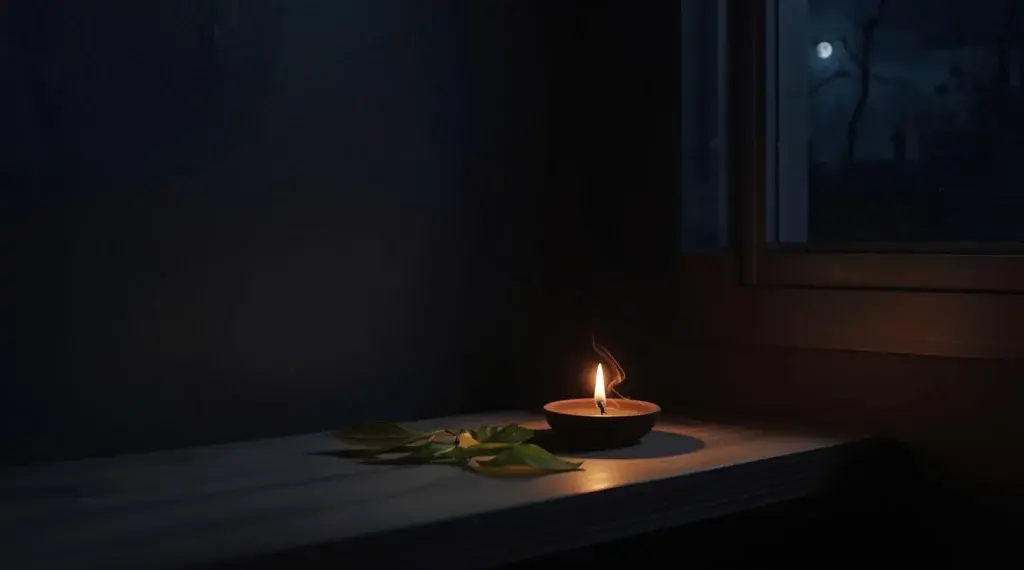
A quiet house. A single lamp is burning steadily. Fewer words. Fewer expectations. A night where nothing is demanded of you except presence.
At the time, no one explained why. We simply observed. Only later did I understand that Maha Shivaratri isn’t about celebration in the usual sense; it’s about presence.
In a world that constantly asks us to produce, react, and perform, Shivaratri offers something rare: permission to pause.
This post is for anyone who wants to honor the festival without feeling like they need to fast perfectly, stay awake all night, or follow rituals they don’t fully connect with. This is about meaning, not endurance.
Before we go deeper, here’s a simple way to understand this festival at a glance
Maha Shivaratri at a Glance
Festival: Maha Shivaratri
When: Late winter (February–March), moonless night
What it honors: Lord Shiva
Core theme: Destruction of ego, inner stillness, renewal
Emotional reminder: You don’t have to carry everything forward
The Mythological Heart of Maha Shivaratri (Why These Stories Exist)
What’s interesting is that Maha Shivaratri doesn’t have just one mythological story. It has several, and each highlights a different aspect of inner strength. These stories weren’t meant to be memorized; they were meant to be felt.
The Night Shiva Held the Poison
During the Samudra Manthan, the churning of the cosmic ocean, a deadly poison called Halahala surfaced before the nectar of immortality. The poison was so powerful it threatened all creation.
When no one else could contain it, Shiva stepped forward and drank it — but did not swallow it. He held it in his throat, with Goddess Parvati steadying him so the poison would not spread.
This is why he is called Neelkanth, the blue-throated one.
The deeper message isn’t sacrifice through suffering. Its strength is through containment.
Maha Shivaratri reminds us that sometimes wisdom looks like holding discomfort instead of passing it on.
Source:https://www.britannica.com/topic/Samudra-Manthan
The Night of the Infinite Pillar of Light
Another story tells of Shiva appearing as an endless pillar of light, the Jyotirlinga, when ego-driven conflict arose between Brahma and Vishnu.
Neither could find its beginning or end.
The realization was simple: ultimate truth cannot be measured, owned, or conquered.
This is why Shiva is worshipped in the form of the lingam — a symbol of infinite consciousness rather than a fixed form.
Maha Shivaratri becomes a night of humility. A reminder that not everything needs resolution — some things need surrender.
Source:https://www.hinduamerican.org/blog/shiva-lingam-meaning
What Maha Shivaratri Really Represents (Beyond Rituals)
At its core, Maha Shivaratri is not about celebration — it’s about conscious subtraction.
Unlike festivals that invite abundance, color, or outward joy, Shivaratri asks something quieter of us: to pause, to restrain, to observe.
Lord Shiva is often misunderstood as a figure of destruction, but this “destruction” is not violent or chaotic. It’s deliberate. Necessary. Clearing.
This festival exists to remind us that:
- Before growth comes release
- Before clarity comes stillness
- Before renewal comes awareness
That’s why traditional practices emphasize fasting, wakefulness, silence, and repetition. These weren’t rules meant to test endurance — they were tools designed to interrupt habit and bring awareness back into the body and mind.
Shivaratri represents the courage to stop performing and start witnessing.
And that meaning hasn’t changed, even if our lives have.
Why Maha Shivaratri Feels Especially Relevant Today
Modern life rarely permits us to end things properly.
We move from phase to phase without processing:
- Grief that hasn’t been named
- Identities we’ve outgrown
- Exhaustion we keep pushing through
- Emotional weight we normalize instead of releasing
We’re encouraged to “move on,” “stay positive,” or “start fresh” — often without ever pausing to ask what needs to dissolve first.
Maha Shivaratri does the opposite.
It doesn’t rush renewal. It honors what must end before something new can begin.
This is why the festival feels so grounding today — especially in midlife, during transitions, or in seasons of quiet uncertainty. It creates a culturally sanctioned pause. A night where you’re allowed to stop striving and simply be honest.
Not hopeful. Not productive. Just truthful.
And sometimes, that’s the most restorative place to begin.
Modern Shivaratri for Busy Lives
Let’s be honest: most of us aren’t able to fast strictly, stay awake all night, or follow elaborate rituals — and that’s okay.
Maha Shivaratri was never meant to be overwhelming.
If your life is full, your mind is tired, and your calendar is packed, here’s a modern, meaningful way to observe Shivaratri without pressure:
A Simple Shivaratri Rhythm
- Morning: Set one intention for the day (clarity, patience, release, strengths
- Midday: Practice restraint in one small way (lighter meals, less scrolling, fewer distractions)
- Evening: Light a diya or candle — not for ritual, but for awareness
- Night: Sit in silence for 5–10 minutes before bed
That’s it.
No perfection required. Just presence.
Choose Your Shivaratri Intention (Pause Here)
This is the heart of the festival — and the most powerful part.
Before moving on, take a moment to ask yourself:
- What am I holding onto that no longer serves me?
- Where do I need stillness instead of control?
- What inner strength do I want to honor this year?
Choose one intention for this Shivaratri. Not five. Not a list. Just one.
Let that intention guide how you move, speak, and pause — even if only for a few hours.
A Festival of Quiet Strength
What I appreciate most about Maha Shivaratri is that it doesn’t demand explanation. It meets you where you are.
Whether you observe it spiritually, culturally, or simply as a pause, this festival honors the idea that strength doesn’t always look loud. Sometimes it looks like restraint. Sometimes it looks like stillness. Sometimes it looks like choosing awareness over habit. And maybe that’s the reminder we need most.
And when you’re ready to explore other festivals that balance this inward energy, the Cultural Celebration series is here to guide you gently.