
When I think of Makar Sankranti, I don’t remember instructions. I remember feelings.
The smell of til-gul in small steel bowls.
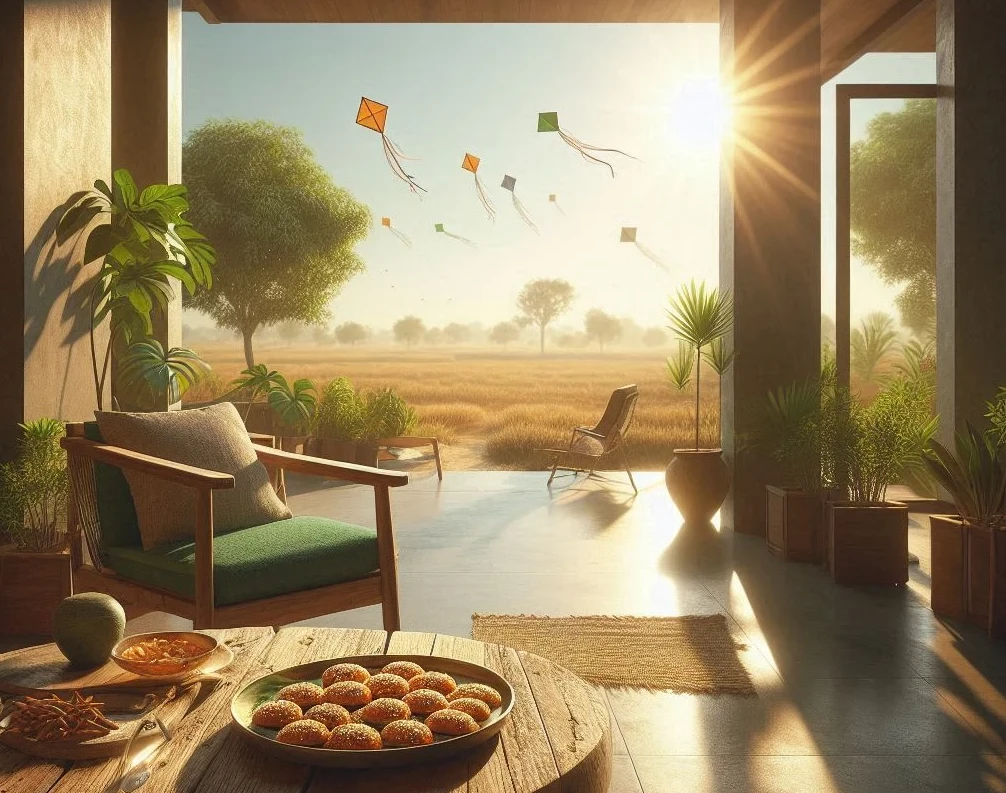
Bright kites cutting through the winter sky.
Sunlight that felt warmer than it had in weeks.
No one sat us down and explained the meaning. We just did it. And somehow, the day felt lighter. Now, years later, life looks very different. We’re busier. More scattered. Often far from family. And sometimes, when festivals come around, there’s this quiet tension: I want to honor this… but I don’t want it to feel forced, overwhelming, or performative. If that sounds familiar, you’re not alone. And this post is for you.
This isn’t a checklist or a “do it perfectly” guide. It’s a gentle reintroduction to what Makar Sankranti actually means, why it still matters, and how to celebrate it in ways that feel grounding, modern, and real.
Makar Sankranti, at a Glance
- Festival: Makar Sankranti
- When: Mid-January (based on the sun’s movement, not the lunar calendar)
- What it marks: The sun’s northward journey (Uttarayan)
- Core theme: Light returning, gratitude, fresh beginnings
- Emotional reminder: The hardest part of the season is behind you
What Is Makar Sankranti Called Across India?
One of the most beautiful things about Makar Sankranti is how the same idea shows up differently across India — shaped by land, crops, climate, and community.
- Makar Sankranti – North India, Maharashtra
- Uttarayan – Gujarat (famous for kite flying)
- Pongal – Tamil Nadu (harvest-focused, multi-day celebration)
- Lohri – Punjab (celebrated just before Sankranti)
- Magh Bihu – Assam
- Khichdi Parv – Uttar Pradesh
- Makara Vilakku – Kerala
- Pedda Panduga – Andhra Pradesh & Telangana
Different foods. Different rituals.
Same underlying message:
Thank nature. Mark change. Move forward together.
This moment mattered deeply to our ancestors, and in many ways, it matters just as much now.
What Our Ancestors Were Really Doing (In Plain Language)
Let’s remove the heavy explanations for a moment. At its core, Makar Sankranti was deeply practical.
- Winters were harsh
- Days were short
- Food depended entirely on harvest cycles
When the sun began its northward journey, it meant longer days, warmth, and survival. This wasn’t abstract symbolism — it was real-life information that affected health, food, and hope.
Why til and jaggery?
Because they:
- Provide warmth during cold months
- Are nutrient-dense
- Represent sweetness and balance
Sharing til-gul wasn’t about etiquette. It was about community care.
Why kites?
Because looking up matters.
Movement matters.
Joy matters, especially after long, dark months.
In many ways, Makar Sankranti was our ancestors saying:
“We made it through. Let’s not forget to celebrate that.”
Why Makar Sankranti Still Matters — Maybe More Than Ever
We may not depend on the sun for crops the same way anymore, but we do struggle with:
- Burnout
- Seasonal low energy
- Time passing without pause
- Feeling disconnected from roots
Makar Sankranti gives us permission to stop and ask:
- What did I survive this season?
- What am I grateful for?
- What am I ready to release?
Honestly, this festival is an ancient reset ritual, long before wellness culture made resets trendy. And the best part? You don’t need hours, priests, or perfection to honor it.
Simple Ways to Celebrate Makar Sankranti in Real Life
If You’re Short on Time (or Energy)
Keep it tiny. Truly.
- Light a diya or candle and sit quietly for 3–5 minutes
- Eat one piece of til-gul slowly and intentionally
- Step outside and feel the sun on your face, no phone
That alone is enough. You’re not doing it wrong by keeping it simple.
If You Have Kids or Elders at Home
- Share one memory of how Sankranti was celebrated when you were young
- Fly a kite, draw one, or watch them move in the wind
- Invite elders to tell stories — those stories are rituals too
Connection doesn’t require complexity.
If You Live Abroad or Away From Family
This one is close to my heart.
- Make one traditional dish (simplified is okay)
- Schedule a short video call just to wish everyone
- Message three people you’re grateful for
Proximity isn’t required for presence.
If You Want It Low-Key but Meaningful
- Wear something comfortable in warm tones (yellow, white, orange)
- Create a tiny altar space — a candle, flower, or photo
- Put your phone away for 15 minutes
No checklist. No performance. Just intention.
A 10-Minute Mini Ritual You Can Do Tonight
Step 1: Prepare the space
Clear one small surface. Light a lamp or candle.
Step 2: One symbolic action
Eat til-gul, step into sunlight, or simply sit quietly.
Step 3: Name an intention
Say (out loud or silently):
“I welcome light, clarity, and ease into the coming season.”
That’s it. You just celebrated Makar Sankranti in a way that fits your life.
Reflection Prompts (Perfect for Journaling or Dinner Conversations)
- What carried me through the last season?
- What warmth am I grateful for today?
- What do I want more of as days grow brighter?
These prompts also translate beautifully into:
- Pinterest quote pins
- Instagram carousels
- Reel voiceovers
Helpful Tools (Only If They Add Meaning)
A Simple Diya
- Best for: Small homes or beginners
- Why it helps: Grounding, calming, reusable
- Honest note: Needs gentle cleaning and care
A Small Puja Thali
- Best for: Families building consistent rituals
- Why it helps: Keeps rituals intentional, not chaotic
- Note: Requires storage space
Children’s Cultural Storybooks
- Best for: Second-generation kids or families abroad
- Why it helps: Builds identity naturally
- Note: Some oversimplify regional differences
Tools should support the ritual — not replace it.
The Heart of Makar Sankranti (This Is What Matters)
Makar Sankranti isn’t about doing more. It’s about:
- Pausing
- Acknowledging effort
- Welcoming light — literally and emotionally
Try one small ritual this year. Notice how you feel afterward. And if you’re craving more ways to celebrate culture without pressure, explore the other Cultural Celebration posts on the site. This space exists to help you stay rooted and restored, not overwhelmed.
You don’t have to recreate your childhood exactly. You just have to carry its meaning forward.
If You Want to Turn This Into a Shared Celebration (Without Stress)
If you’re feeling called to celebrate Makar Sankranti with others — friends, family, neighbors, or even a small virtual group — here’s the good news: You don’t need a big guest list, elaborate rituals, or a packed schedule. What makes this festival special is intention, warmth, and togetherness.
Think of this as a gathering of light, not an event to manage.
Who This Kind of Celebration Is Perfect For
- Families who want to keep traditions alive without pressure
- Friends who enjoy meaningful, low-key gatherings
- People living away from extended family who still crave connection
- Anyone who wants a calm, heart-centered alternative to loud parties
What You Actually Need (Keep It Simple)
1. A Clear Intention (This Matters Most)
Before thinking about food or decor, decide:
- Is this about gratitude?
- Is it about reconnecting?
- Is it about welcoming a fresh season together?
You can even say this out loud when guests arrive:
“We’re keeping this simple — just a moment to welcome light and spend time together.”
That single sentence sets the tone.
2. A Small, Warm Setup
You don’t need a full puja setup unless it feels meaningful to you.
Simple essentials:
- One diya or candle
- A small plate of til-gul or seasonal sweets
- Fresh flowers or a yellow/white cloth
- Natural light if possible (or soft lamps in the evening)
Set this up in a corner or center table — it becomes a shared focal point.
3. Easy, Shareable Food
Food should feel comforting, not exhausting.
Low-effort ideas:
- Til-gul, chikki, or ladoos
- Khichdi, pongal, or simple rice dishes
- Warm drinks (tea, coffee, or spiced milk)
- Potluck-style contributions if guests are open to it
Tip: Let guests know ahead of time that simplicity is encouraged.
4. One Gentle Group Ritual
Choose just one shared moment. That’s enough.
Some options:
- Lighting the diya together in silence
- Everyone sharing one thing they’re grateful for
- A short intention round: “One word for the season ahead”
- Elders sharing a Sankranti memory from their childhood
No scripts. No pressure. Let it unfold naturally.
5. A Way to Connect (Not Perform)
Connection doesn’t need activities stacked back-to-back.
Ideas that flow easily:
- Sitting in a circle with tea
- Kids flying kites or drawing them
- Soft music in the background
- Phone-free time for the first 15–20 minutes
The goal isn’t entertainment — it’s presence.
A Gentle Reminder
You are not responsible for recreating anyone’s childhood exactly. You are simply creating a moment of light, warmth, and togetherness and that is more than enough.
If you’d like support with:
- Curated celebration checklists
- Simple ritual guides
- Modern cultural gathering ideas
You’ll find more resources throughout the Cultural Celebrations section of the site.
Start small.
Celebrate with heart.
Let the light do the rest.