
Your complete guide to Chaitra Navratri 2026 — March 19 to March 27
Every year, thousands of people begin Navratri fasting with beautiful intentions and by Day 3, they’re exhausted, headachy, and wondering if they’re doing something wrong.
You’re not doing something wrong. You just haven’t been given the right guide.
Navratri fasting is not a punishment for the body. The word “Upvaas”, the Sanskrit term for fasting — literally means “to stay close to God.” It is a practice of purification, intention, and inner reconnection, not deprivation. When done with the right knowledge, fasting for all 9 days can leave you feeling clearer, lighter, and more energized than when you started.
This guide is for every beginner who wants to honor the fast fully, feel well throughout, and arrive at Navami — Day 9 — feeling genuinely renewed.
🌿 What Is Navratri Fasting, Really?
Navratri fasting is not a single diet, it is a spectrum of practices, and you get to choose what fits your body and your life.
The three most common types of Navratri fasting are:
- Nirjala (water-only fast): The strictest form: no food, only water. Typically observed by experienced practitioners or for one specific day only.
- Phalahari (fruit and milk fast): The most widely practiced. You consume fresh fruits, dairy, nuts, and specific fasting-approved foods throughout the day.
- Partial fast (first and last day): Many working professionals, new mothers, or those with health considerations observe a strict fast only on Day 1 (Pratipada) and Day 9 (Navami), eating sattvic food on the days in between.
There is no shame in any of these. Goddess Durga values your sincerity far more than your suffering.
🍋 What You Can Eat: The Navratri-Approved Food List
One of the biggest reasons beginners feel drained is not the fasting itself, it’s choosing the wrong foods within the fast. Here is exactly what is permitted during Chaitra Navratri 2026:
Fasting-Approved Flours & Grains
- Kuttu ka atta (buckwheat flour) — for rotis, puris, pancakes
- Singhara atta (water chestnut flour) — for puris and halwa
- Rajgira atta (amaranth flour) — high in protein, excellent for energy
- Sabudana (sago/tapioca pearls) — the classic Navratri staple
- Samak ke chawal (barnyard millet) — a rice substitute that provides steady energy
Vegetables (Sattvic & Fasting-Approved)
- Sweet potatoes, regular potatoes, pumpkin, bottle gourd (lauki), raw banana, colocasia (arbi)
Avoid onion and garlic — they are considered tamasic (energy-lowering) and are prohibited during the fast.
Protein & Dairy
- Dairy: Milk, curd (yoghurt), paneer, ghee, buttermilk, cream — all allowed and highly recommended
- Nuts & seeds: Almonds, cashews, peanuts, walnuts, makhana (fox nuts), pumpkin seeds
Dairy and nuts are your most important allies during the fast. They provide sustained protein and fat that prevent energy crashes.
Fruits
All fresh fruits are permitted. Priorities: bananas (for energy and potassium), apples, pomegranates, papayas, mangoes, and watermelon. Coconut water is excellent for hydration and electrolytes.
Salt & Spices
- Use Sendha Namak (rock salt) exclusively — regular table salt is not permitted
- Allowed spices: cumin, black pepper, cardamom, cinnamon, cloves, ginger, green chilli, ajwain
- Avoid: turmeric (haldi), mustard seeds, asafoetida (hing), coriander powder, fenugreek
Cooking Oils
Use pure ghee as your primary cooking fat. It provides slow-releasing energy, supports digestion, and is considered the most sattvic cooking medium in Ayurveda. Groundnut oil, coconut oil, and sesame oil are also permitted.
⛔ What to Avoid (The Quick Reference)
- Wheat, rice, barley, oats, maida, besan, corn flour
- All pulses and lentils (dal, rajma, chana)
- Onion and garlic
- Regular table salt
- Non-vegetarian foods, eggs
- Alcohol and caffeinated drinks
- Heavily fried, tamasic, or processed foods
🗓️ Your 9-Day Fasting Food Guide: Day by Day
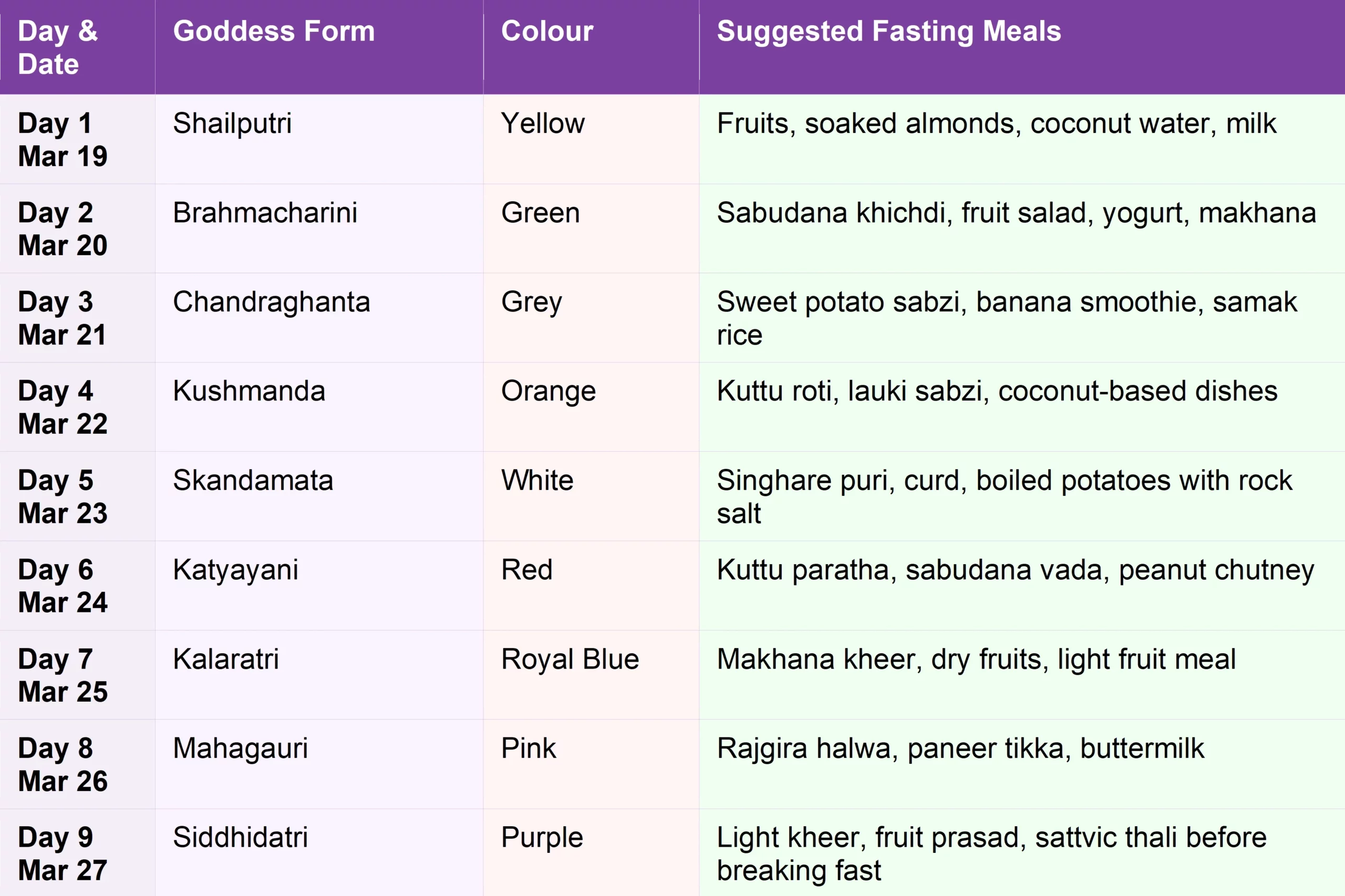
Each day of Navratri honors a different form of Goddess Durga and each comes with its own energy and colour. Here is your day-by-day food and intention guide for Chaitra Navratri 2026:
⚡ Why People Feel Drained While Fasting (And How to Fix It)
If you’ve ever felt weak, headachy, or irritable while fasting, one of these five reasons is almost certainly why:
- Not Eating Enough Protein
Many beginners eat only fruits and miss out on dairy and nuts — the protein backbone of Navratri fasting. Include paneer, curd, milk, and a handful of peanuts or cashews at every meal. Rajgira (amaranth) flour is also surprisingly high in protein and works beautifully for rotis.
2. Dehydration
Fasting without adequate hydration is the number one cause of headaches and fatigue during Navratri. Aim for at least 8–10 glasses of water per day. Coconut water, buttermilk, and herbal teas all count — and they’re far more hydrating than plain water because they replenish electrolytes too.
3. Eating Two Large Meals Instead of Smaller Ones
Going hours without food and then eating one large sabudana khichdi will spike your blood sugar and cause a crash. Instead, eat smaller portions more frequently: a banana and soaked almonds in the morning, a light meal at noon, roasted makhana in the afternoon, and a warm meal in the evening.
4. Too Much Deep-Fried Food
Kuttu pakoras and sabudana vadas are delicious — but deep-fried foods weigh the body down and cause lethargy, which is the opposite of what fasting is meant to achieve. Opt for roasted makhana, baked sweet potato, steamed or lightly pan-cooked dishes, and grilled paneer. Reserve fried foods for one treat per day, not every meal.
5. Skipping Ghee
This surprises many beginners. Ghee is not just permitted during Navratri — it is actively recommended. In Ayurveda, fasting naturally increases Vata dosha, causing dryness, anxiety, and weakness. Ghee is the primary antidote: it provides slow-releasing calories, supports digestion, and nourishes the brain. Use 1–2 teaspoons per meal.
💪 Practical Tips for Staying Energised All 9 Days
“Upvaas means to stay close to God — not to punish the body.
Nourish yourself with intention, and the fast becomes a celebration.”
— connect-n-rejuvenate
Morning Ritual
- Wake up early and drink a glass of warm water with a few drops of lemon
- Take a few slow, conscious breaths before your puja, this sets a spiritual tone for the day
- Have a light breakfast within 1–2 hours of waking: fruits, soaked almonds, or a small bowl of curd
Mid-Morning
- Sip coconut water or buttermilk to replenish electrolytes and stay alert
- A small handful of roasted makhana or dry fruits keeps energy stable between meals
Afternoon Meal
- Make this your most substantial meal: sabudana khichdi with peanuts, kuttu roti with lauki sabzi, or samak rice with a simple raita
- Always include a protein source: curd, paneer, or peanuts
Evening
- A warm glass of milk with cardamom is deeply nourishing and helps the body settle for evening puja
- Light some incense, recite a simple Durga mantra, and take five minutes to sit quietly, this is the heart of Navratri
Night Meal
- Keep it light: a small bowl of rajgira halwa, fruit with curd, or a warm samak rice khichdi
- Avoid heavy meals after sunset
🍳 5 Quick Navratri Meals That Actually Keep You Full
- Sabudana Khichdi with Peanuts — The ultimate Navratri staple. Peanuts provide protein; sabudana provides steady carbohydrates. Soak sabudana for 4–6 hours for the best texture. Cook in ghee with green chilli, rock salt, and lemon juice.
- Samak Rice Pulao — Treat samak (barnyard millet) like rice: cook it with ghee, cumin, and allowed vegetables. It’s lighter on the stomach than regular rice and provides sustained energy.
- Kuttu Roti with Aloo Sabzi — A complete, satisfying meal. Kuttu (buckwheat) is high in protein and fibre; potatoes cooked with cumin, green chilli, and rock salt are deeply comforting.
- Rajgira Banana Smoothie — Perfect for busy mornings. Blend 1 banana with 1 cup of milk, 1 tsp rajgira flour, a pinch of cardamom, and honey. Quick, filling, and nourishing.
- Makhana Kheer — An evening treat that doubles as a light dinner. Roast makhana in ghee, simmer with milk, sweeten with jaggery or sugar, and add cardamom and saffron.
💚 Special Considerations: When to Modify Your Fast
Important: Always priorities your health. Navratri fasting should improve your wellbeing, not harm it.
The Goddess values devotion and intention above all else.
If you are pregnant, elderly, managing a health condition, or on medication, please consult your doctor before fasting. You can still honor Navratri through puja, mantra, and sattvic eating, the spiritual practice is not dependent on complete food restriction.
A partial fast, where you observe a strict vrat on Day 1 and Day 9 and eat light sattvic food in between, is a completely honored tradition. Many working professionals and new mothers follow this approach.
🕎 The Deeper Purpose: Navratri as a Spring Reset
Chaitra Navratri falls in early spring, precisely when Ayurveda recommends a seasonal cleanse. After the heaviness of winter, the body naturally craves lighter foods, more movement, and deeper rest. The 9-day fast is not a coincidence: it is perfectly timed to align with the body’s natural rhythms.
When you fast during Navratri with awareness, you’re not just following a religious tradition; you’re participating in a practice that has helped people reconnect with themselves, clear accumulated heaviness, and invite fresh energy into their lives for centuries.
At connect-n-rejuvenate, we believe that the most powerful spiritual practice is one that also honors your physical body. You cannot sustain a deep spiritual life if you’re running on empty.
So eat well. Rest where you need to. Drink your water. Light your Diya. And let these 9 days be a genuine renewal, not an endurance test.
✔ Your Beginner’s Navratri Fasting Checklist
✓ Stock your kitchen with: sabudana, kuttu atta, samak rice, rajgira, makhana, sendha namak, ghee, and seasonal fruits
✓ Prepare a simple day-by-day meal plan using the table above
✓ Drink at least 8 glasses of water or hydrating liquids daily
✓ Include protein in every meal (dairy, nuts, or paneer)
✓ Use ghee as your primary cooking fat
✓ Eat 3–4 smaller meals rather than 1–2 large ones
✓ Set a daily morning ritual, even 5 minutes of quiet puja or meditation
✓ Listen to your body. A partial fast is a complete fast when observed with devotion.
Jai Mata Di — May your Navratri be nourishing, sacred, and full of light.