
My daughter was six the first time she asked me why we put oil lamps in the windows instead of just turning on the porch light. Fair question. I didn’t have a real answer for her that year, just “because we always have.” I’ve had a few more Diwalis since then to figure out better ones.
If you’re hosting this November and want the rituals to land with the next generation instead of getting the eye-roll, here’s the full five nights, what they traditionally mean, and why they still hold up under a more practical lens.
A quick note before diving in: what follows is written from the Hindu, puja-centered version of Diwali, since that’s the one I grew up with. If your household marks this week as Bandi Chhor Divas or as Mahavira’s liberation, the specific rituals below won’t be yours, but the instinct underneath them, using light and gathering to mark that darkness doesn’t get the last word, is one you’re already living in your own tradition.
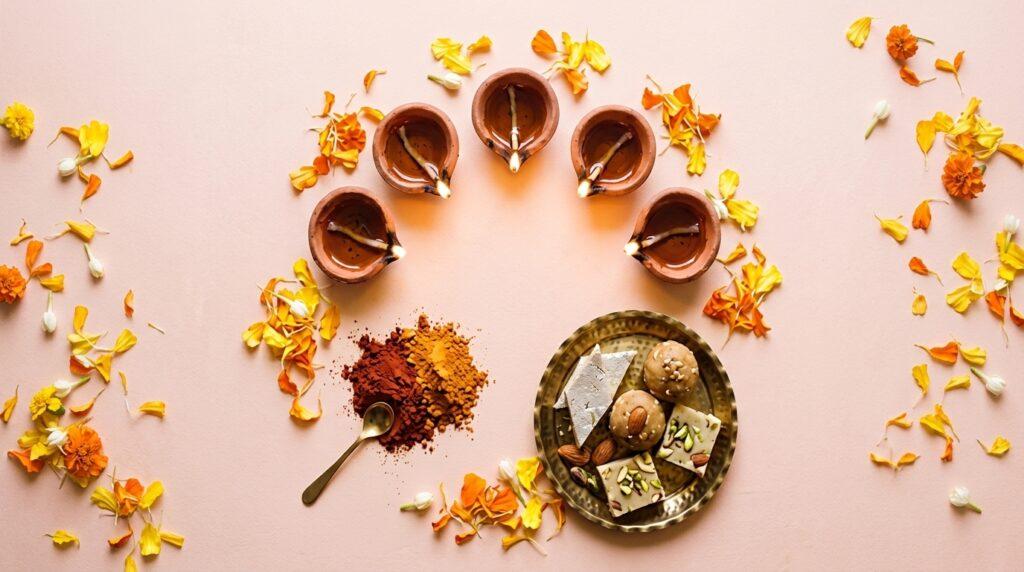
What Diwali is, and why desi people still celebrate it thousands of miles from where it started
Diwali marks the return of Lord Rama to Ayodhya after 14 years of exile, and separately, in many regions, the day Lakshmi (prosperity) is invited into a freshly cleaned home. Two different stories, same underlying instruction: darkness is temporary, and you signal that you know it by lighting something.
The “why do desi people still celebrate it abroad” question usually hides a better question: does a ritual lose its point if the geography changes? It doesn’t, because the point was never the geography. The point was always the signal, to yourself and to whoever’s nearby, that this house is paying attention to the turn from dark to light. An apartment in Plano can send that signal as well as a house in Ahmedabad. The five nights below are how you send it properly.
Night one: Dhanteras — the reset your finances and your junk drawer both need
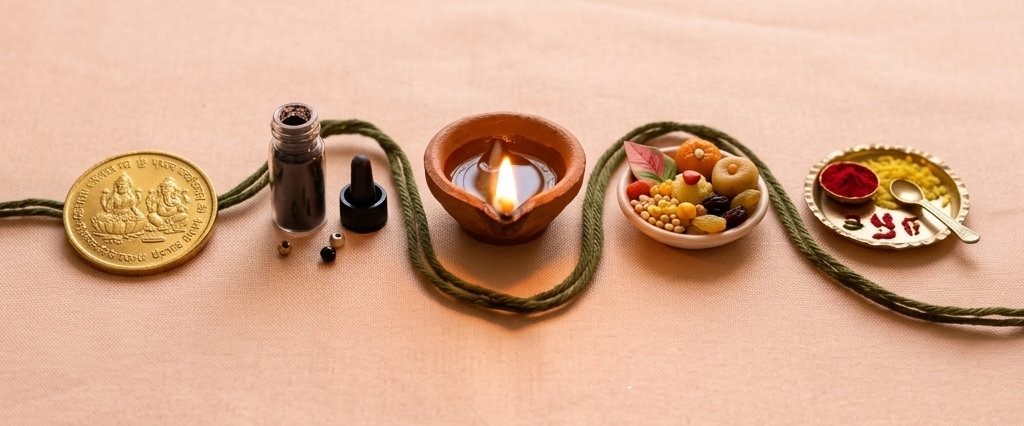
The traditional telling: a new bride is said to have outwitted Yama, god of death, on this night by lighting lamps and piling gold and silver coins at her door, dazzling him with light and wealth until he left without taking her husband. That’s the origin of buying gold and lighting extra lamps on Dhanteras.
The literal ritual is easy to dismiss as an excuse to shop. The logic underneath it is not: you’re marking the start of a five-day period by taking stock of what you have and consciously adding to it, rather than letting acquisition happen passively all year. It’s the desi version of a New Year’s resolution, just aimed at your finances and your home instead of your gym membership.
For a diaspora household, this is the easiest night to keep, because it needs zero cultural translation. Buy one thing, big or small, gold, a kitchen tool, even just paying down a bill early. Tell your kids what you bought and why. That’s the whole ritual.
Night two: Kali Chaudas (called Chhoti Diwali or Naraka Chaturdashi in other regions) — the night you clear out what’s actually weighing on you
The traditional telling: this is the night Krishna, with his wife Satyabhama’s help, defeated the demon Narakasura at dawn, freeing thousands of captives and clearing the way for the next day’s celebration. The kajal and the bitter kadha eaten tonight echo that same idea, protection applied before the main event.
Kali Chaudas gets far less airtime than Lakshmi Puja, but it’s arguably the more useful ritual for a modern household. Kids get a small dot of kajal behind the ear or on the forehead as protection from the “evil eye,” and many families eat something deliberately bitter, a kadha made of methi and other herbs, as a folk remedy timed to the change of season.
Strip away the superstition and what’s left is a genuinely useful annual practice: one night set aside specifically to name and release whatever’s been weighing on the household, a grudge, a stretch of bad luck, lingering stress, before you walk into the main celebration carrying it. The kajal and the bitter kadha are just physical anchors for that release, something a kid can actually participate in and feel, rather than an abstract idea of “letting go.”
For a diaspora household, this is a good night to make explicit with your kids: tonight isn’t about decorations, it’s about clearing the air, literally and otherwise, so that tomorrow’s celebration starts clean.
Night three: Lakshmi Puja — the main event, and the one worth doing right
The traditional telling: Lakshmi, goddess of prosperity, is said to visit only homes that are clean, lit, and welcoming on this night, which is why the cleaning and the diyas happen before she’s invited in.
The logical read for a kid raised abroad: a house that’s cluttered, dark, and unwelcoming doesn’t attract good things, whether you’re talking about prosperity in the mythological sense or just about whether anyone wants to stop by. Lakshmi Puja is your family formally deciding, once a year, to make the house worth walking into. That’s not superstition. That’s just true, and it’s why the ritual has survived five thousand years of skeptics.
Practically: this is the night to do the full version, diyas at every entrance, rangoli at the door, sweets ready for anyone who visits, fireworks or sparklers if your city allows them. If you’re hosting family, this is the anchor night.
Night four: Govardhan Puja / Annakut — the thank-you dinner nobody frames as a thank-you dinner
The traditional telling: when Krishna convinced the villagers of Vrindavan to stop worshipping the storm god Indra and honor the land itself instead, an angry Indra sent torrential rain, and Krishna lifted the entire Govardhan Hill on one finger to shelter the village until the storm passed. Annakut recreates the mountain of food the villagers piled up in gratitude afterward.
Underneath the religious framing is a very simple idea: before you eat, you acknowledge that the food exists because of something bigger than your own effort, weather, land, labor, luck.
This is the night to bring in the friend-group gathering if you’re running two separate Diwali events this year, family earlier in the week, friends here. Frame it exactly as what it is: everyone brings something, the table gets absurdly full, and before anyone eats, someone says out loud what they’re grateful for. You don’t need the mythology to make that land. You just need the format.
Night five: Bhai Dooj — the sibling check-in ritual you didn’t know you needed
The traditional telling: Yama, god of death, visited his sister Yamuna on this day, who welcomed him with a tilak and a meal, and was so moved that he declared any brother who receives this from his sister would be protected from harm. That’s the origin of the ritual today.
For a diaspora family without local siblings nearby, this is the night to expand the definition. Cousins count. Close family friends who function as siblings count. The point of the ritual isn’t the literal blood relationship, it’s a once-a-year forcing function to check in on the people who occupy that role in your life, wherever they happen to live now.
When should I celebrate Diwali in the diaspora, if the actual date falls on a Tuesday?
This is the question that quietly stresses out most diaspora families every year, and almost nobody says it out loud: the real date and the celebrated date don’t have to be the same day. Lakshmi Puja has an auspicious time window worth honoring quietly at home, even on a Tuesday night after work. The bigger family or friend gathering can happen the following weekend. Splitting “the spiritual observance” from “the social gathering” isn’t a compromise, it’s how most temples and community groups already structure it. Give yourself permission to do the same.
How do I celebrate Diwali away from family?
I’ll say the quiet part first: some years this is genuinely hard. You’re in a country where nobody else’s calendar shifts for this week, nobody else’s kitchen smells like yours three houses down, and it can land more like grief than tradition. That reaction doesn’t mean you’re doing this wrong, it means the thing you grew up with was real and you miss it.
The honest answer past that feeling is that you build a substitute household out of whoever’s around, and you do it on purpose rather than hoping it happens. That’s not a lesser version of Diwali. Every diaspora generation before you did exactly this: found or built a local desi community, and made that the extended family for the holidays that used to run on blood relation. If you don’t have that yet, this is the year to start it, even if it’s three other families the first time.
How do I explain Diwali to non-Indian friends or coworkers without the textbook version?
Skip “it’s the festival of lights” as your opener, everyone’s heard it and it explains nothing. Try: “It’s five days, each with its own reason, but the short version is we spend one night making sure our house is clean, lit, and welcoming, because we believe that’s what invites good things in. Also there’s a lot of fried food.” That gets the logic across in one breath and gives them an opening to ask a real follow-up instead of nodding politely.
Where can I find Diwali events near me?
Search your city’s name plus “Diwali mela” or check with the nearest Hindu temple or cultural association, most run a community event in the weeks around the holiday, separate from the at-home puja. If nothing turns up locally, that’s usually a sign the community exists but isn’t organized yet, which is its own opportunity.
Building this together
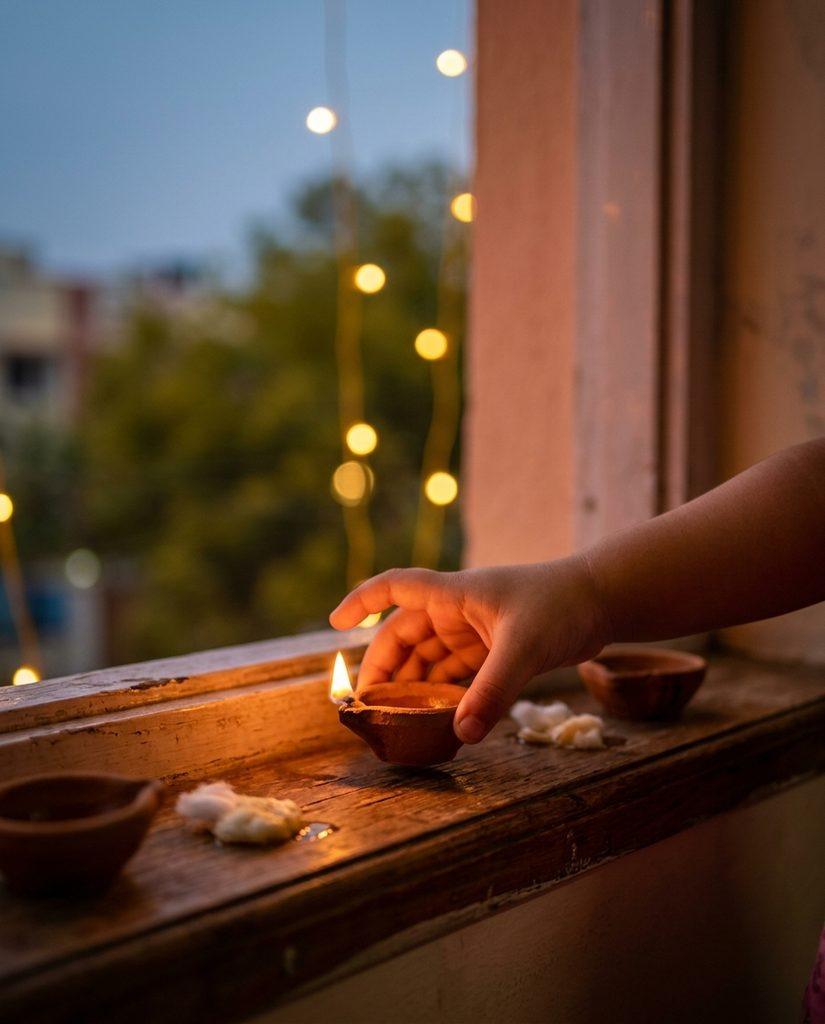
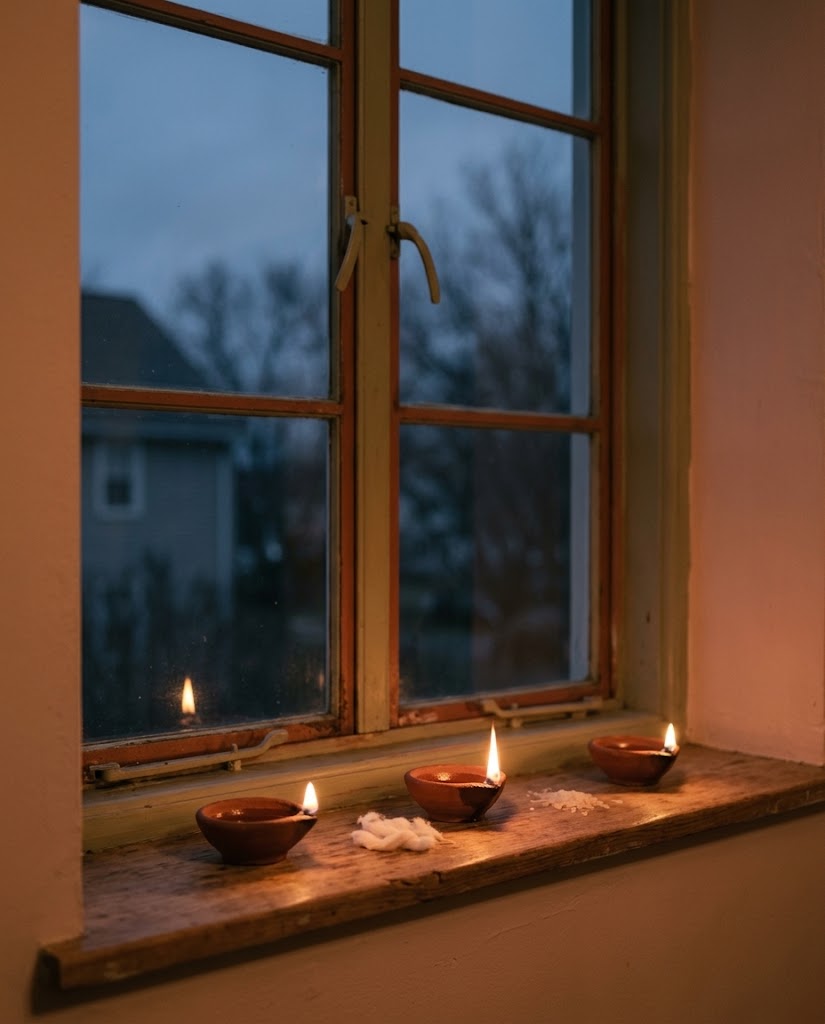
Which finally answers my daughter’s question, and it’s the same idea behind everything else in this piece: a porch light comes on by itself, on a timer, without anyone deciding anything. A diya only lights because someone chose to light it, on purpose, for someone specific. That’s the whole difference between a porch light and a diya, and it’s the same difference between letting a holiday happen to you and actually hosting one. I handed her the matches after that. She got it immediately.
None of these five nights need the original mythology to still make sense to a kid growing up in Texas or Toronto or London. They need someone to translate the function of each ritual, not just the story, and that’s the whole gap this piece is trying to close.
If you’re hosting this year, whether it’s a full family gathering or a smaller friends’ version, I’m putting together a full Diwali Celebration Playbook that expands every one of these five nights into an actual runnable plan, food, decor, timing, and a signature activity for each gathering type. Coming soon.
Leave a Reply