
Bringing Joy, Gratitude, and Community Into Every Detail
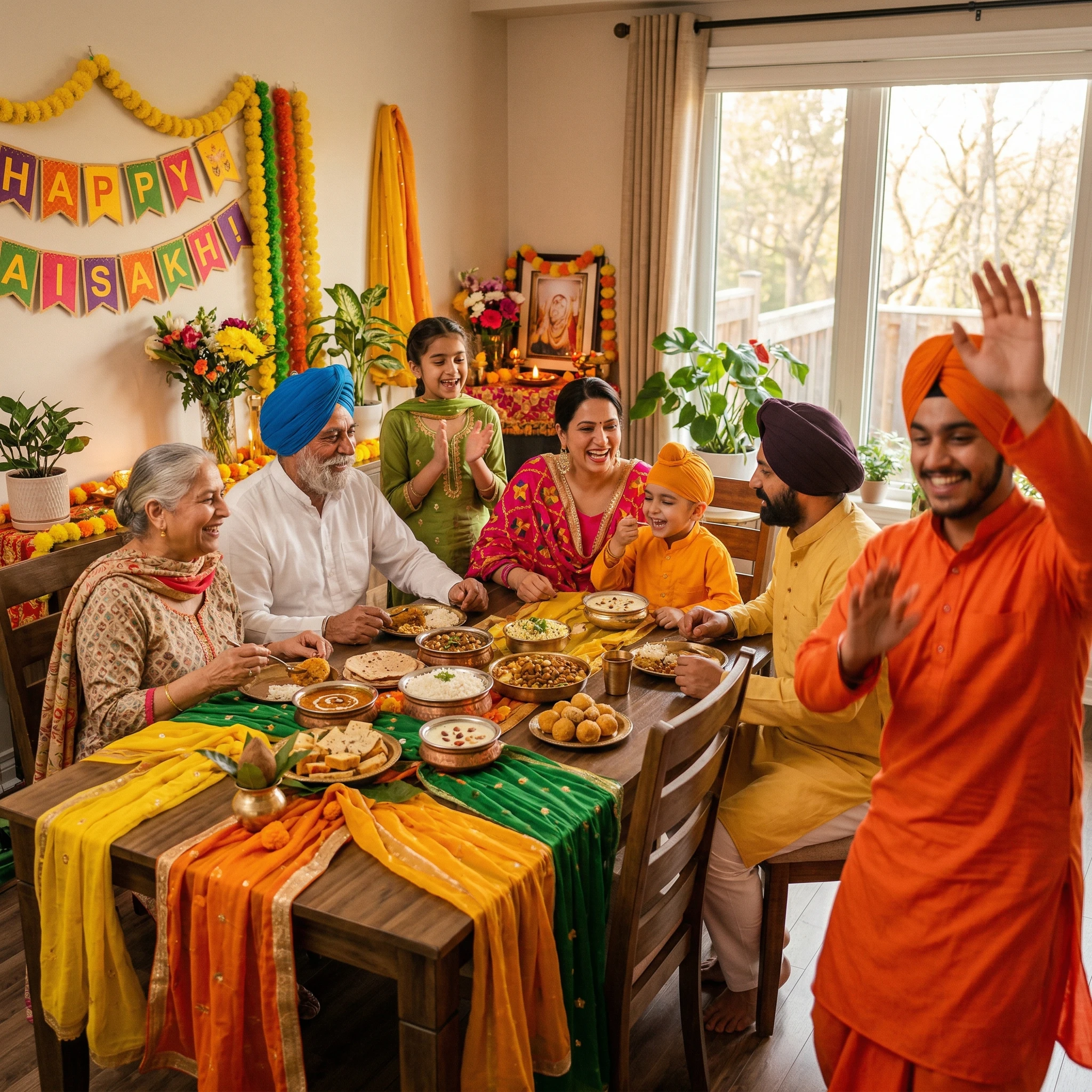
There’s a moment during Baisakhi when everything feels alive: the rhythm of dhol, the color of dupattas swirling, the laughter of families gathering, and the quiet gratitude for harvest, abundance, and faith.
And yet, behind the scenes, many hosts feel something very different:
How do I make this feel special?
How do I do justice to tradition without feeling overwhelmed?
How do I bring meaning, not just logistics?
If you’ve felt this tension, you’re not alone.
This guide is not about planning a perfect event.
It’s about creating a meaningful Baisakhi experience — one that feels rooted, joyful, and doable.
What Baisakhi Really Represents (And Why That Matters for Planning)
Baisakhi is both a harvest festival and a deeply spiritual day in Sikh tradition. It marks the founding of the Khalsa by Guru Gobind Singh in 1699 — a moment of courage, equality, and collective identity.
It is also a celebration of:
- Gratitude for abundance
- Community service (seva)
- Shared meals (langar)
- Joy through music and dance
When you understand this, planning becomes clearer:
Baisakhi is not about doing more.
It’s about choosing what matters most.
Source:
https://www.britannica.com/topic/Vaisakhi
https://www.sikhcoalition.org/resources/baisakhi/
Step 1: Start With Intention, Not Logistics
Before décor, food, or invites, ask:
- What do I want people to feel when they leave?
- What part of Baisakhi do I want to highlight — gratitude, community, spirituality, joy?
Pick one core intention.
Examples:
- “I want this to feel like community and warmth.”
- “I want my kids to understand the meaning of Baisakhi.”
- “I want a joyful, high-energy cultural celebration.”
This becomes your filter.
Everything else becomes easier.
Step 2: Simplify Your Celebration Into 4 Pillars
Instead of juggling everything at once, structure your event around four elements:
1. Spiritual Anchor
2. Food & Hospitality
3. Cultural Expression
4. Connection & Participation
You don’t need perfection in all four, just intention.
Step 3: Create a Simple Spiritual Anchor
You don’t need a full-scale religious setup to honor the day.
Simple ideas:
- Play kirtan softly in the background
- Share a short story about Guru Gobind Singh and the Khalsa
- Begin with a 2-minute gratitude reflection
- Visit a Gurdwara earlier in the day if possible
Even a small moment of grounding transforms the tone of your celebration.
Step 4: Recreate Langar-Style Warmth (Without Complexity)
The heart of Baisakhi is langar, a shared, humble meal open to all.
You can bring this spirit home without stress:
Keep Food Simple & Intentional
- Choose 3–5 core dishes instead of a large spread
- Include comforting staples: dal, roti, rice, sabzi
- Add one festive item (like kheer or jalebi)
Create a Shared Serving Style
- Buffet or family-style serving
- Encourage guests to serve one another
- Invite close friends to bring one dish each
The goal is not variety.
It’s togetherness.
Step 5: Design a Festive Yet Easy Setup
You don’t need elaborate décor to create a traditional feel.
Focus on Key Elements:
- Bright Punjabi colors (yellow, orange, green)
- Dupattas as table runners or backdrops
- Fresh flowers or marigold accents
- Simple floor seating with cushions (optional)
Create One “Wow” Corner:
- A small photo or dance space
- Add dhol beats playlist
- Use it as your energy zone
Keep it intentional, not overwhelming.
Step 6: Bring in Bhangra & Gidda – The Easy Way
You don’t need performers or choreography.
Simple Ideas:
- Create a short playlist of Baisakhi/Bhangra songs
- Start with 1–2 confident dancers (or even kids!)
- Teach a few basic moves
- Keep it playful, not performative
Baisakhi is about participation, not perfection.
Step 7: Make It Engaging for All Ages
This is where most hosts feel stuck.
For Elders:
- Give them a role (storytelling, blessing, leading a prayer)
- Create a comfortable seating area
For Kids:
- Simple activities like:
-
- Coloring Punjabi motifs
- Learning one Bhangra step
- Helping serve food
For Everyone:
- Group moments:
-
- Dance circle
- Shared meal
- Gratitude round
When people feel included, they feel connected.
Step 8: Avoid Chaos With a Loose Flow (Not a Rigid Schedule)
Instead of a strict timeline, think in phases:
- Arrival & light music
- Short grounding moment (story or gratitude)
- Food & mingling
- Dance & celebration
- Closing with dessert or chai
This creates structure without pressure.
Step 9: Fresh Ideas That Feel Authentic (Not Forced)
If you want your event to feel unique:
- Add a “Gratitude Board” where guests write what they’re thankful for
- Create a mini storytelling moment about Baisakhi’s history
- Include a “Teach One Thing” moment (dance step, phrase, tradition)
- End with a group photo in traditional attire
Small touches create lasting memories.
Step 10: When You’re Short on Time or Energy
Let go of the idea that everything must be done by you.
- Buy ready-made food from a trusted local place
- Keep décor minimal but intentional
- Focus on 1–2 meaningful elements instead of 10 perfect ones
- Ask for help — in Indian culture, community is part of the celebration
A meaningful Baisakhi is not built alone.
When It All Comes Together
At some point, the music will rise.
Someone will start clapping.
Kids will run around.
Elders will smile quietly in the corner.
And you’ll realize:
It was never about getting everything right.
It was about creating a space where:
- People felt welcomed
- Traditions felt alive
- Gratitude was shared
Final Reflection
Before your celebration begins, pause for a moment.
Ask yourself:
- Did I create space for connection?
- Did I honor the spirit of Baisakhi, even in a small way?
- Did people feel seen, included, and joyful?
Because that is the true success of Baisakhi.
Not perfection.
But presence.